
66 Lottery Colour Streaks: How Often Five Reds in a Row Happens
Published 10 November 2026 · Worked maths explainer · 18+
You open the history panel and see red, red, red, red, red. It looks like a signal, and it is the moment most people start searching for a 66 Lottery colour prediction. This page, part of an independent guide to the 66 Lottery platform, does the arithmetic instead: how likely a run of five, eight or ten of one colour is, how many such runs a full day of rounds should contain, and what any of that says about the next draw.
Quick answer: five reds in a row has a chance of 1 in 32 from any given starting round. That is uncommon for one specific moment and completely ordinary across hundreds of rounds. The streak tells you nothing about the following draw, which is still a 5 in 10 chance for red and 5 in 10 for green.
Probability of one colour, from the game’s own rules
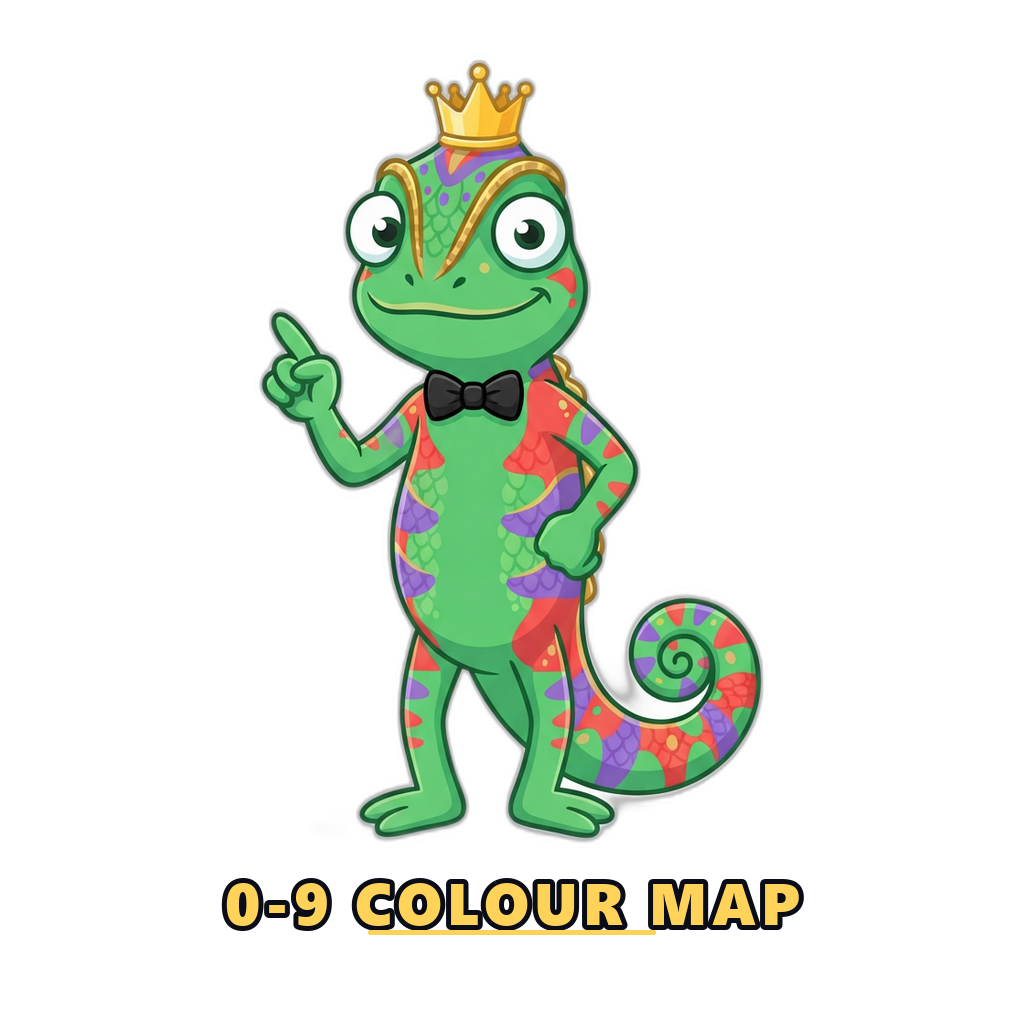
Everything here follows from the rules of the game and nothing else. A round draws one digit from 0 to 9. The digits 2, 4, 6 and 8 are red, and 0 is red shared with violet. The digits 1, 3, 7 and 9 are green, and 5 is green shared with violet. The full map, and how each draw is settled, is laid out in the colour guide.
If each digit is equally likely, which is what a fair draw means, then red shows up on five digits out of ten and green on the other five. So the chance that the history panel shows a red result in any one round is 5 in 10, or one half. Count only the four pure red digits, leaving out the shared 0, and the chance is 4 in 10. This article uses the first definition, because a red dot in the history is what people count when they spot a streak.
One assumption is doing the work: each round is independent of the last. We cannot inspect the operator’s draw system from outside, and this site does not claim to. The calculation below is simply what the stated rules imply when every round is a fresh draw.
Five, eight and ten in a row: the numbers
For independent rounds, the chance of the same result several times running is the single-round chance multiplied by itself once per round. Five reds is one half, five times over: 1/2 × 1/2 × 1/2 × 1/2 × 1/2 = 1/32.
| Streak length | Calculation | Chance | As a percentage |
|---|---|---|---|
| 5 in a row | (1/2) to the power 5 | 1 in 32 | about 3.1% |
| 8 in a row | (1/2) to the power 8 | 1 in 256 | about 0.39% |
| 10 in a row | (1/2) to the power 10 | 1 in 1,024 | about 0.098% |
The same figures apply to green. If you only care that a run is a single colour, either one, the first round can be anything and the next four must match it, so a five-long run of one colour has a chance of 1 in 16 from any starting round. For pure red digits only, the sum is 0.4 to the power 5, which is about 1 in 98.
These are small numbers for one named moment. The mistake is to stop there, because nobody looks at one moment. You look at a scrolling history with a new result every round.
Why long streaks are normal across a full day
A 1-minute room that ran every minute for 24 hours would produce 60 × 24 = 1,440 rounds. Whether a particular room runs without a pause is something to check in the app, so treat 1,440 as a round figure for the arithmetic rather than a fact about the schedule.
A red run of five or more begins whenever a non-red round is followed by five reds. The chance of that at any point is 1/2 × 1/32 = 1/64. Across 1,440 rounds that is about 1,440 ÷ 64 = 22 red runs, and the same again for green.
| Run length | Red runs | Red or green runs |
|---|---|---|
| 5 or more | about 22 | about 45 |
| 8 or more | about 3 | about 6 |
| 10 or more | about 0.7 | about 1.4 |
Read the bottom row again. Ten of one colour in a row, the kind of run that gets screenshotted and shared as proof of a pattern, is expected about once a day in a single room from chance alone. Five in a row is expected roughly every half hour. A history panel with no long runs at all would be the strange one.
The gambler’s fallacy after a streak
After five reds, two opposite beliefs appear. One says green is due. The other says red is hot and will continue. Both read the past as information about the next draw, and with independent rounds neither is right.
The 1 in 32 figure is the chance of five reds measured before any of them has happened. Once five reds are on the screen, they are finished events with a probability of 1. The only open question is the sixth round, and the sixth round is one draw of one digit: 5 in 10 red, 5 in 10 green. Six reds in a row is rarer than five (1 in 64) only because it needs the first five as well, and you already have those.
It also helps to notice that the “due” idea and the “hot” idea cannot both be true, yet each will look correct about half the time. That is exactly what you would expect from two guesses on a 50-50 outcome. The wider set of staking systems built on these beliefs is covered in the companion guide.
What a streak means for your next stake
In terms of odds, nothing. In terms of behaviour, a streak is the moment you are most likely to break your own rules, so it is worth deciding in advance what you will do when one appears.
- Keep the stake the same. The chance of the next colour has not moved, so there is no reason for the stake to move either. Raising it “because green must come” only increases the amount at risk on an unchanged bet.
- Do not double into a run. A run of eight against you is expected several times in a long day of rounds. A doubling plan that reaches its eighth step is staking 128 times the first bet to win back one unit.
- Treat screenshots of streaks as ordinary. A seller showing a ten-long run and a call that “caught the break” is showing you something that happens about once a day with no skill involved.
- Use the streak as a pause signal. If a run makes you want to stake more than you planned, that is a good moment to close the room for a while.
You can watch all of this for free. Open the demo, note every run of five or more over an hour, and compare the count with the table above. Seeing the runs arrive on schedule, with nothing behind them, is more convincing than any formula.
Frequently Asked Questions
How often do five reds in a row happen in 66 Lottery colour prediction?
From any given starting round the chance is 1 in 32, because red appears on 5 of the 10 digits and (1/2) to the power 5 is 1/32. Over 1,440 independent rounds you would expect about 22 red runs of five or more.
After a long red streak, is green more likely next?
No. Each round is a separate draw of one digit, so the next result is still 5 in 10 for red and 5 in 10 for green. The streak that already happened does not change it.
Does a streak of ten prove the game is rigged?
Not by itself. Ten of one colour in a row has a 1 in 1,024 chance from a given round, which works out to roughly one such run per day of 1-minute rounds by chance alone.
Can I use streaks to predict the next colour?
No. Betting with the streak and betting against it both win about half the time, which is the same as picking a colour at random. No reading of the history changes the odds of the next draw.
Play Safely and Responsibly
18+ only. This is an independent informational website, not the operator. Colour prediction is a real-money game of chance, results are random, and no streak, chart or system predicts the next draw. Set a budget before you play, keep stakes flat, and stop when the budget is spent.
66 Lottery and Wingo colour prediction involve real money and real risk. Only adults (18+) should play, and no result can be guaranteed. Read our full safer gambling advice for budgets, limits and support resources.
Related Guides
- Colour Trading MathsWhat is one 66 Lottery colour trading round worth on average? The expected-value formula, the violet split and the expected loss over 100 rounds.
- Wingo Prediction66 Lottery Wingo prediction explained honestly: how rounds and period numbers work, how players read charts and trends, why no prediction is guaranteed, and how to play safely.
- Budget Basics Before You PlayHow to set a real budget before you play: the session limit, the loss limit, the time limit, why chasing losses is the costliest habit in any game of chance, and how to use the free demo instead.